Start With Why
Summary
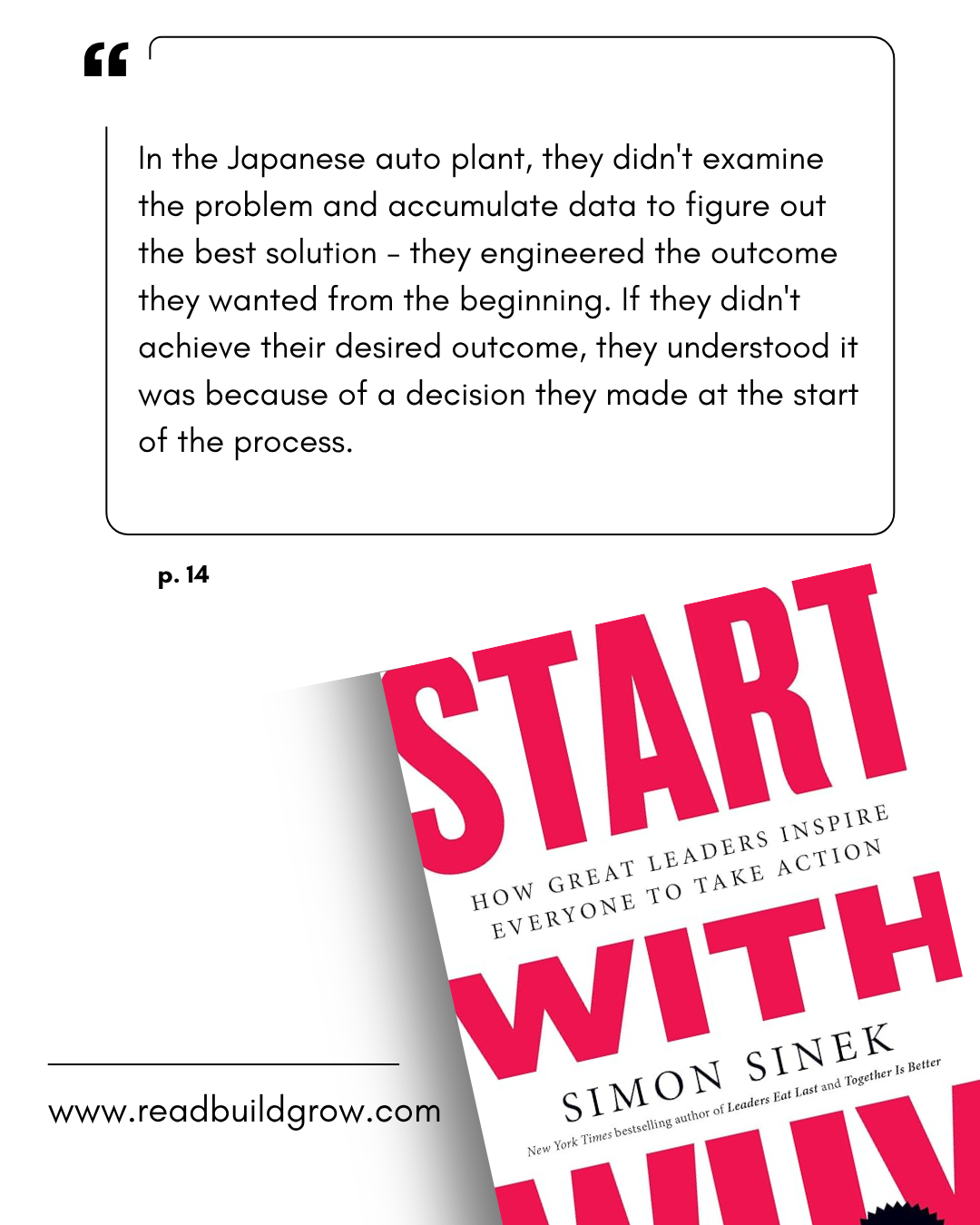
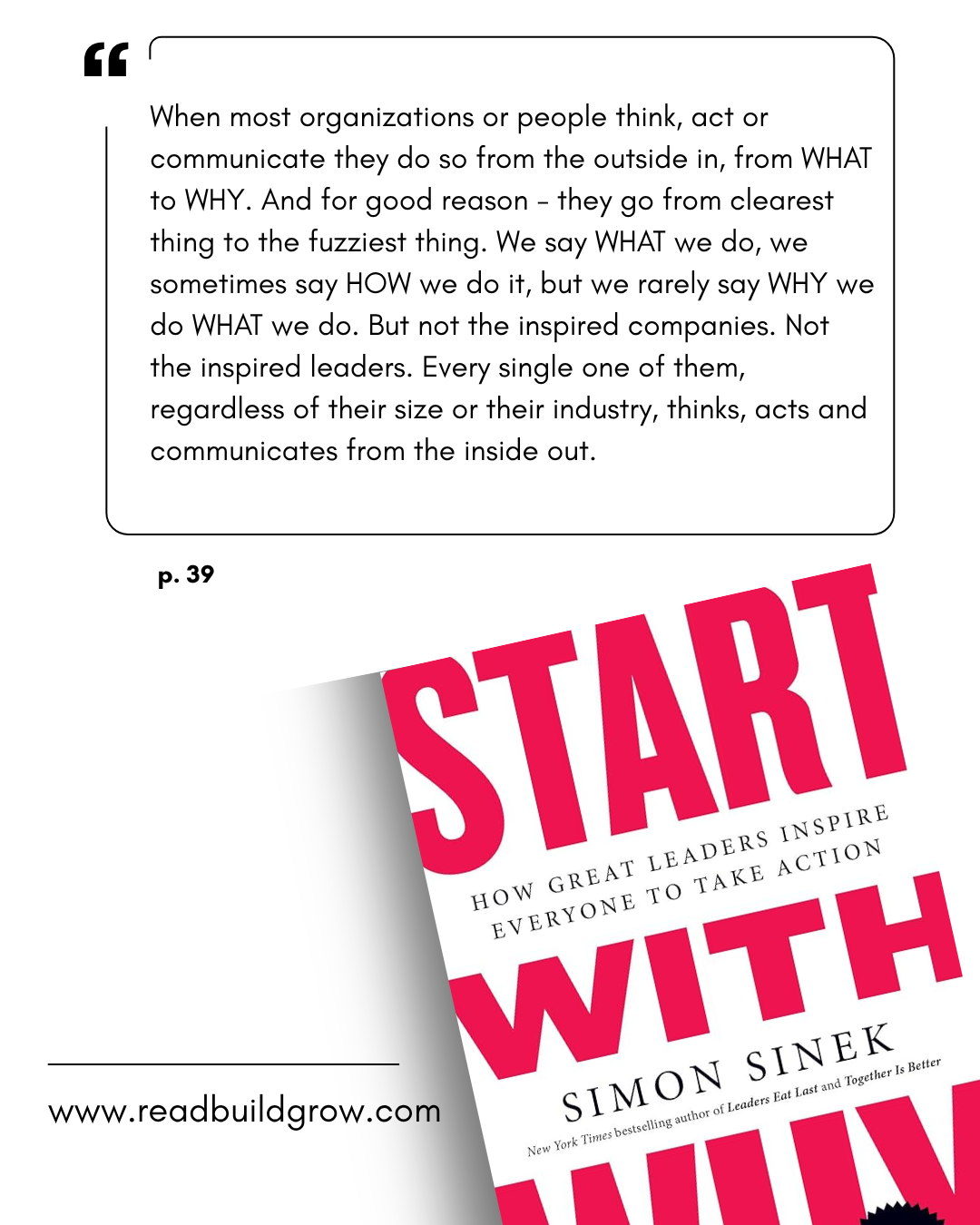
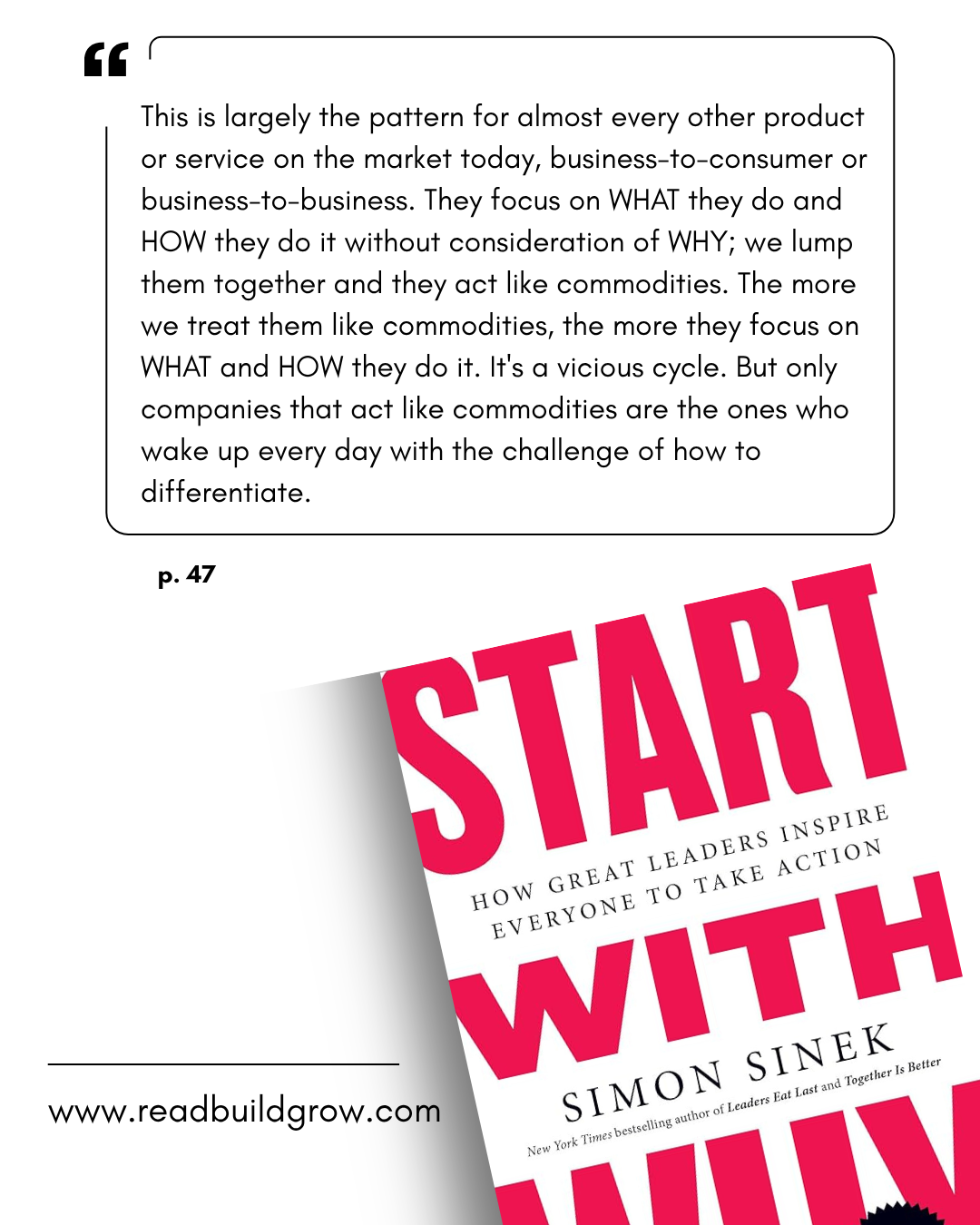
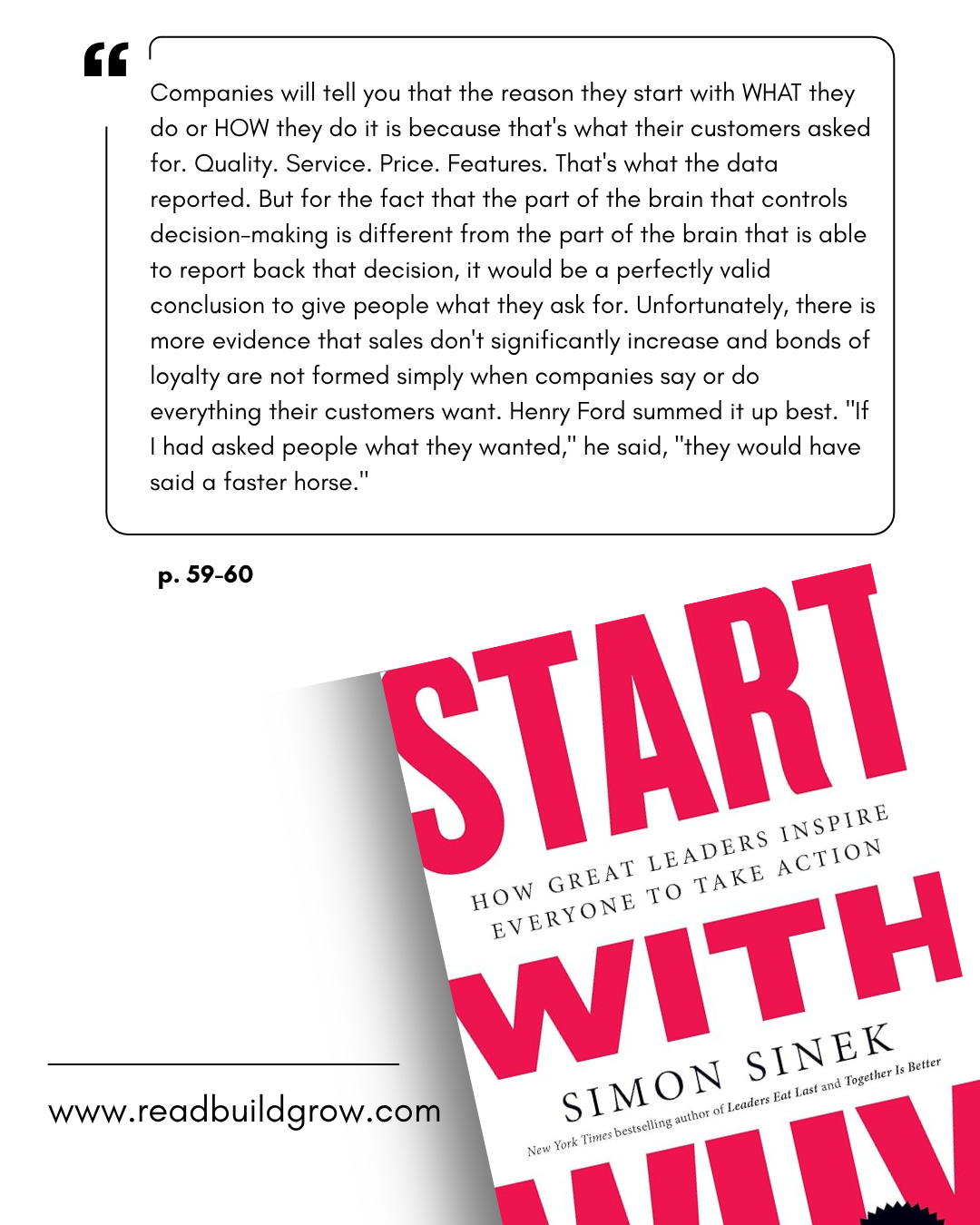
Start with Why explores why some leaders and organizations inspire loyalty, trust, and long-term success while others struggle to create meaningful connections. Simon Sinek argues that people are drawn to a clear sense of purpose before they are drawn to products, services, or features.
Using his Golden Circle framework, Sinek explains how leading with why can influence decision-making, communication, leadership, and business growth. The book encourages readers to move beyond what they do and how they do it and instead focus on the deeper purpose that drives their actions.
Key Takeaways
People connect with purpose before products.
Customers are often drawn to the beliefs and purpose behind a business before they are drawn to specific products or services.
Clarity creates consistency.
A clear understanding of why your business exists helps guide decisions, communication, and priorities over time.
People buy into what they believe.
Customers, employees, and supporters are more likely to engage with organizations whose values and beliefs align with their own.
Great leaders communicate differently.
Influential leaders and organizations tend to communicate from why to how to what rather than starting with products, features, or services.
Purpose can be a competitive advantage.
While products and services can often be copied, a clear purpose and strong culture are much harder to replicate.
Trust grows through consistency.
People trust organizations when their actions consistently align with their stated beliefs and purpose.
Inspiration is more powerful than manipulation.
Discounts, promotions, and incentives may create short-term action, but purpose and inspiration are more likely to create long-term loyalty.
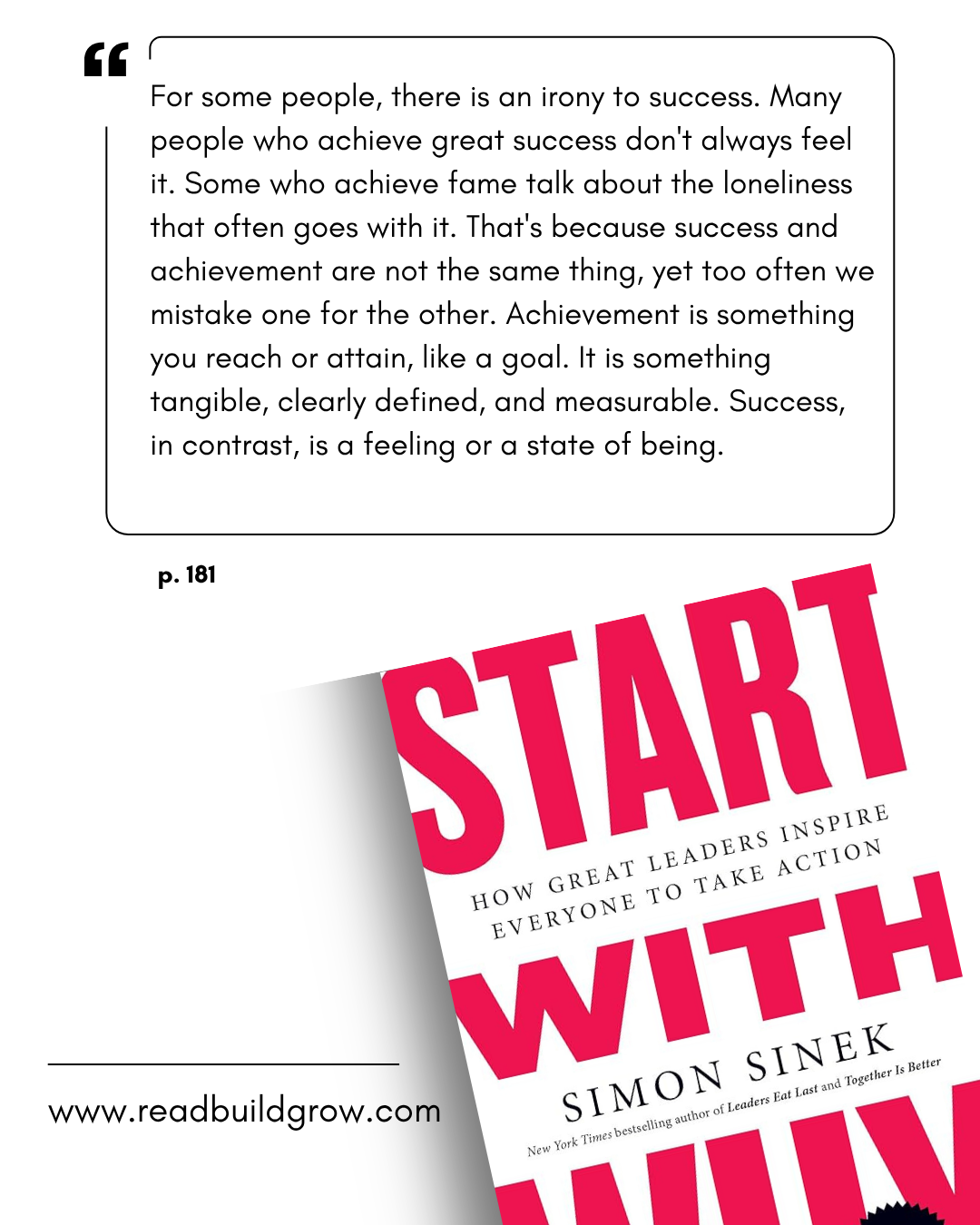
Success can create drift.
As organizations grow, it becomes easier to focus on results, processes, and performance while losing sight of the original reason the business began.
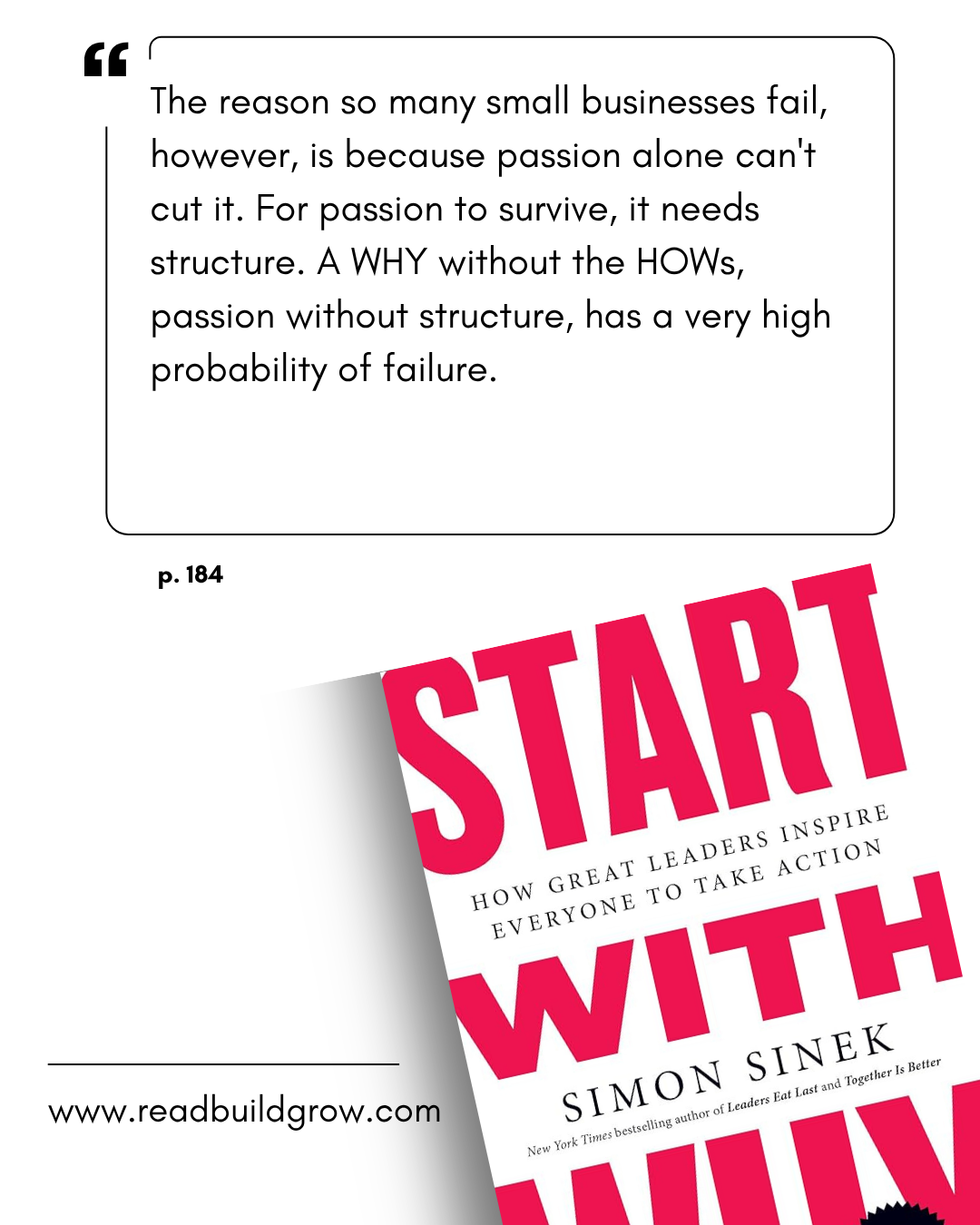
Why requires ongoing reinforcement.
A clear purpose is not something that is established once and forgotten. It must be revisited and reinforced through leadership, communication, and decision-making.
Purpose should influence planning.
Understanding why you do what you do is most valuable when it actively shapes goals, priorities, and future decisions.
“Everything you say and everything you do has to prove what you believe. A WHY is just a belief. That's all it is. HOWs are the actions you take to realize that belief. And WHATs are the result of those actions - everything you say and do; your products, services, marketing, PR, culture and whom you hire.” -page 67
Action Item
Define your why in one or two sentences.
Take time to write down the deeper purpose behind your business beyond the products, services, or revenue it generates. Consider what motivated you to start, what impact you hope to have, and why the work matters to you.
Once you have written your why, review a current goal, project, or marketing message and ask whether it reflects that purpose. If there is a disconnect, identify one small adjustment you can make to better align your actions with the reason you are doing the work in the first place.