Traction
Summary
Traction introduces the Entrepreneurial Operating System, or EOS, a framework designed to help business owners create more clarity, structure, and consistency across their companies. Gino Wickman organizes the framework around six key components: Vision, People, Data, Issues, Process, and Traction.
Throughout the book, Wickman explains practical tools for defining direction, clarifying responsibilities, tracking performance, solving problems, documenting processes, and creating accountability around execution. The book encourages business owners to build a more disciplined operating system so the company can function more consistently and move forward with greater focus.
Key Takeaways
A business needs a clear vision.
Leaders should define where the company is going, what it stands for, and what it is working to accomplish so everyone can move in the same direction.
The right people should be in the right roles.
Wickman emphasizes the importance of having people who fit the company’s core values and are well suited for the responsibilities they hold.
Numbers help reveal what is happening in the business.
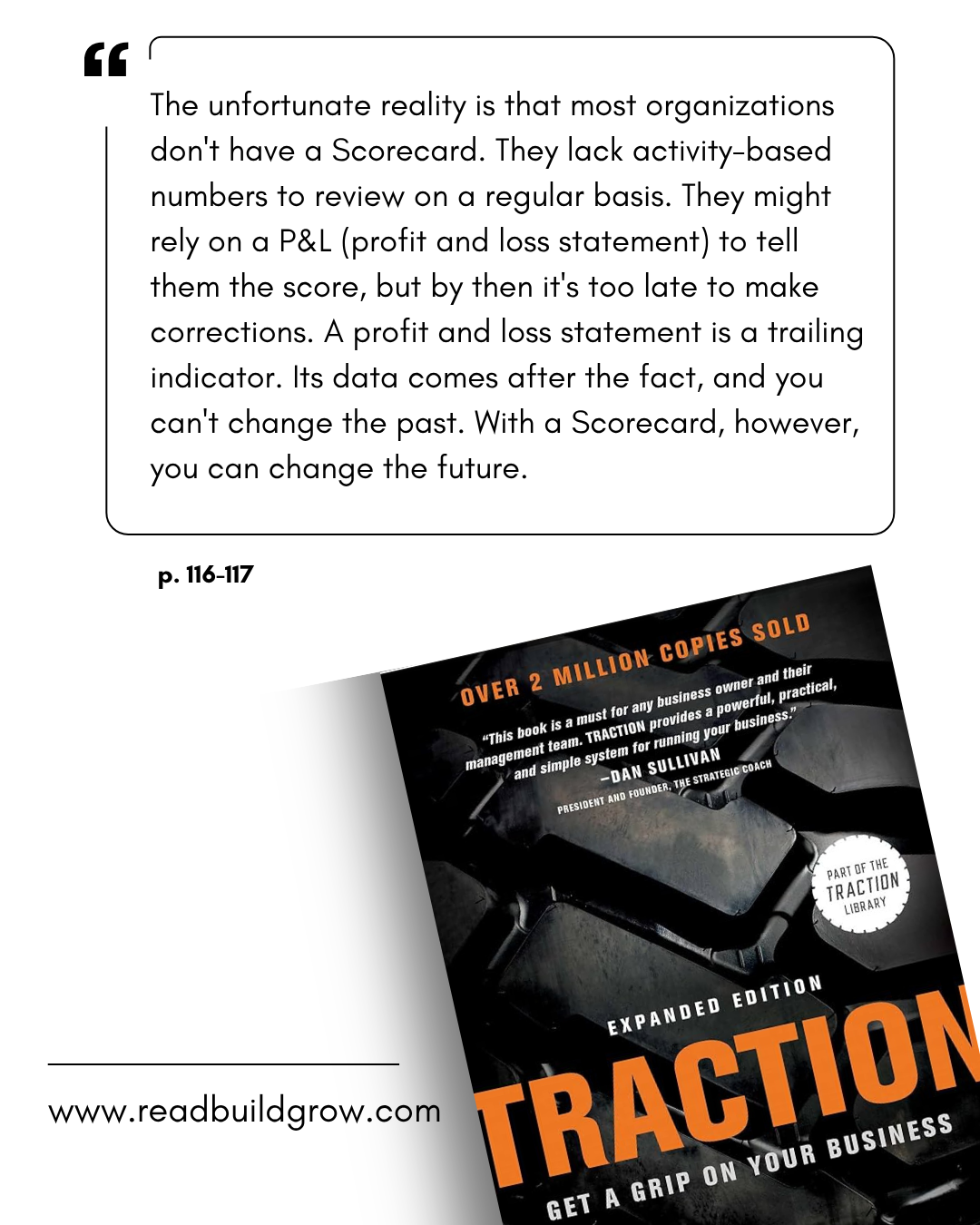
A focused scorecard can help leaders monitor performance, identify trends, and catch problems before they become more serious.
Issues should be identified and solved consistently.
Businesses benefit from creating a structured way to surface problems, discuss them openly, and resolve them rather than allowing them to linger.
Core processes should be documented.
Defining the major processes that keep the business running can improve consistency, communication, and execution.
Short-term priorities create focus.
The EOS framework uses quarterly priorities, called Rocks, to help teams concentrate on the most important work over a defined period.
Accountability should be clearly assigned.
Clear ownership of roles, responsibilities, and outcomes helps reduce confusion and makes it easier to see where decisions and work belong.
Consistent meetings support execution.
A regular meeting rhythm helps teams review progress, discuss issues, and stay aligned around current priorities.
Discipline helps turn plans into results.
The framework emphasizes consistent follow-through, review, and accountability so the business does not rely on ideas alone.
The six EOS components work together as one operating system.
Vision, People, Data, Issues, Process, and Traction are designed to strengthen different parts of the business while working together as a unified management framework.
“Keeping your head clear, your confidence high, and your focus strong are vital in maintaining forward momentum. Most leaders spend most of their time overwhelmed, tired, and buried in the day-to-day routine, unable to see beyond tomorrow. As a result, they don't solve problems as well as they could, they don't lead their people as well as they could, and they're not a good example for them. Great leaders have a habit of taking quiet thinking time. That means escaping the office on a regular basis for an hour or so. By working on yourself and the business, you will rise above feeling frustrated and overwhelmed to a clearheaded and confident state. As a result, when you come back into the business, you will be laser-focused and in the right leadership frame of mind.” -page 214
Action Item
Identify one core process in your business that needs more clarity.
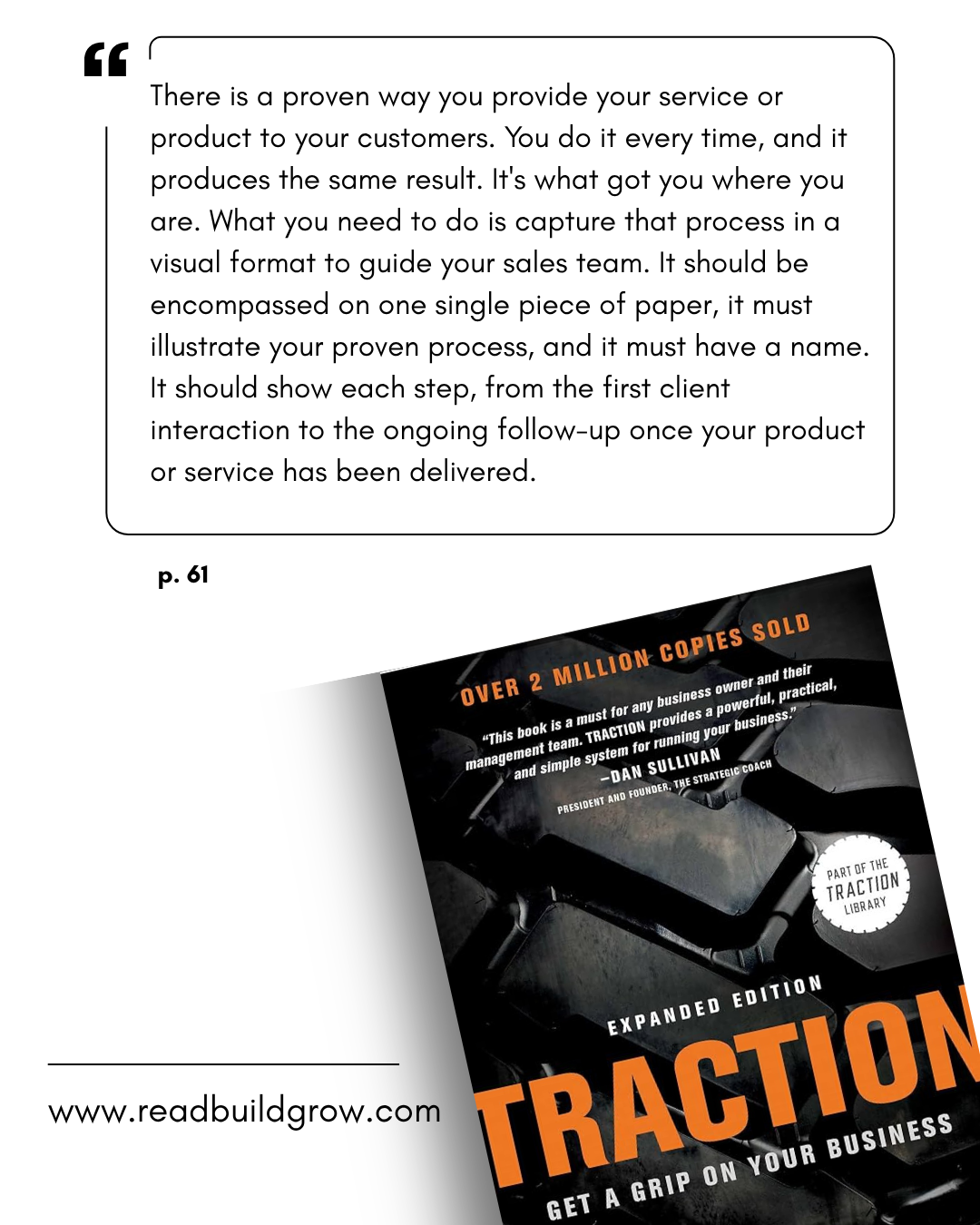
Choose a recurring process that plays an important role in how your business operates, such as onboarding a client, completing a service, reviewing finances, following up with leads, or managing a project.
Write down the main steps involved, who is responsible for each part, and what needs to happen for the process to be completed consistently.
Once you have outlined it, review the process and identify one area that could be made clearer, simpler, or easier to follow. Then make one practical adjustment to strengthen how that process is carried out.